You’ve spent weeks crafting what feels like the perfect federal proposal. Your technical approach is solid, your team is qualified, and your pricing seems competitive. Then the rejection notice arrives with minimal feedback, leaving you wondering what went wrong.
The harsh reality? A single critical error can torpedo even the strongest proposal before evaluators finish reading page one. Government contracting proposals face an unforgiving review process where compliance mistakes, pricing inconsistencies, and formatting oversights can mean instant disqualification.
But here’s the good news: most fatal proposal errors follow predictable patterns. Once you know what government evaluators flag immediately, you can build systems to catch these mistakes before they cost you the contract.
The Top Fatal Errors That Kill Federal Proposals
Missing Critical Requirements in Section L
Section L requirements aren’t suggestions: they’re mandatory instructions that evaluators use as their first screening criteria. When contractors skip formatting requirements, page limits, or submission protocols, evaluators often stop reading entirely.
Common Section L violations include:
- Exceeding page limits (even by a single page)
- Wrong font sizes or margins
- Missing required forms or certifications
- Incorrect file naming conventions
- Submitting to the wrong portal or email
The fix: Create a Section L compliance matrix before you start writing. Check off every requirement as you complete it, and conduct a final compliance review 24 hours before submission.
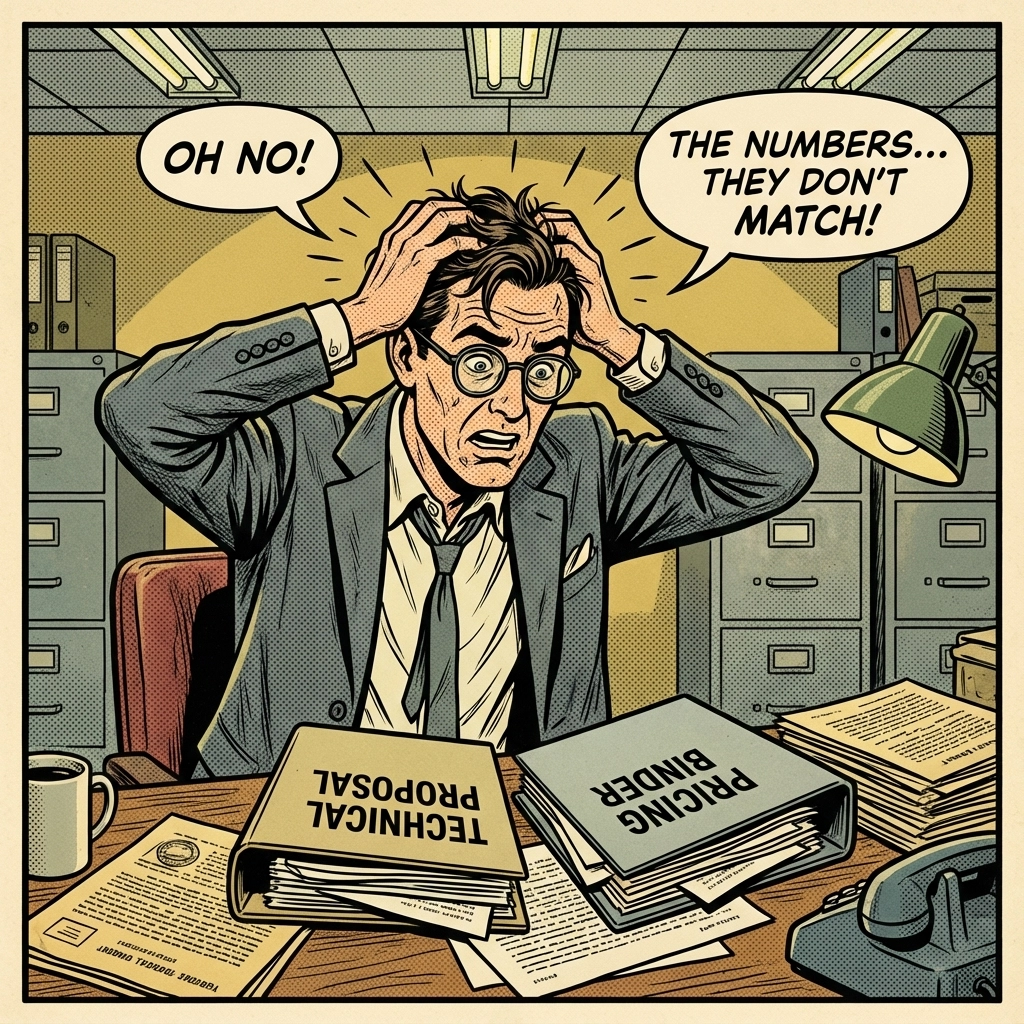
Technical-Pricing Volume Misalignment
Nothing screams “we didn’t proofread” like contradictions between your technical and pricing volumes. When your technical narrative describes 10 full-time employees but your pricing reflects 8, evaluators immediately question your attention to detail.
These misalignments typically occur in:
- Labor categories and skill levels
- Hours per task or phase
- Travel assumptions
- Equipment or material quantities
- Subcontractor roles and responsibilities
Prevention strategy: Assign one person to cross-check all numerical assumptions between volumes before final review. Use a standardized labor category list across all proposal volumes to maintain consistency.
Mathematical Errors in Cost Proposals
Spreadsheet mistakes might seem minor, but they signal deeper problems to government evaluators. A pricing error of even a few hundred dollars can trigger questions about your entire cost methodology.
The most damaging mathematical errors include:
- Formula mistakes in escalation calculations
- Incorrect indirect rate applications
- Billing rate vs. burdened rate confusion
- Subcontractor markup errors
- Travel cost calculation mistakes
Best practice: Lock all formulas in your pricing spreadsheets and use data validation to prevent accidental changes. Have someone outside your pricing team verify all calculations independently.
Unrealistic or Unsupported Pricing
Bidding significantly below market rates without justification raises red flags in best-value evaluations. Government evaluators know market pricing, and unrealistically low bids often indicate either poor understanding of requirements or potential quality issues.
Similarly problematic: pricing without supporting rationale. When your cost narrative lacks explanations for labor rates, indirect costs, or pricing assumptions, evaluators can’t assess the reasonableness of your approach.
Solution: Use market research and historical data to support your pricing decisions. Include clear explanations for any rates that deviate from industry standards, and provide detailed justifications for your cost methodology.
Compliance Catastrophes That Trigger Instant Rejection
Certification and Registration Issues
Your business must maintain active registrations and certifications throughout the proposal process. Expired SAM registrations, lapsed small business certifications, or outdated security clearances can disqualify you immediately.
Modern proposal evaluations have become more sophisticated, as discussed in our recent post about how government evaluators changed their review processes in 2025. Many agencies now use automated systems to verify contractor status before human reviewers see your proposal.
Critical check: Verify all registrations and certifications 30 days before proposal submission. This gives you time to renew anything that’s approaching expiration.
Organizational Conflict of Interest Violations
Failing to identify or properly mitigate organizational conflicts of interest (OCI) can result in immediate disqualification. These conflicts often arise when contractors have access to non-public information or when current contracts create unfair competitive advantages.
Prevention: Disclose any potential conflicts early in your proposal and provide detailed mitigation plans. When in doubt, consult with the contracting officer before submission.
Technical Evaluation Killers
Inadequate Past Performance Examples
Generic or irrelevant past performance examples waste valuable space and fail to demonstrate your capabilities. Evaluators want specific examples that match the scope, complexity, and technical requirements of their solicitation.
Winning approach: Choose past performance examples that directly align with the RFP’s technical requirements. Include specific metrics, outcomes, and lessons learned that demonstrate your ability to deliver similar results.
Missing Key Personnel Qualifications
When proposed key personnel don’t meet the minimum qualifications listed in the RFP, your proposal faces automatic point deductions or disqualification. This includes education requirements, years of experience, specific certifications, or security clearance levels.
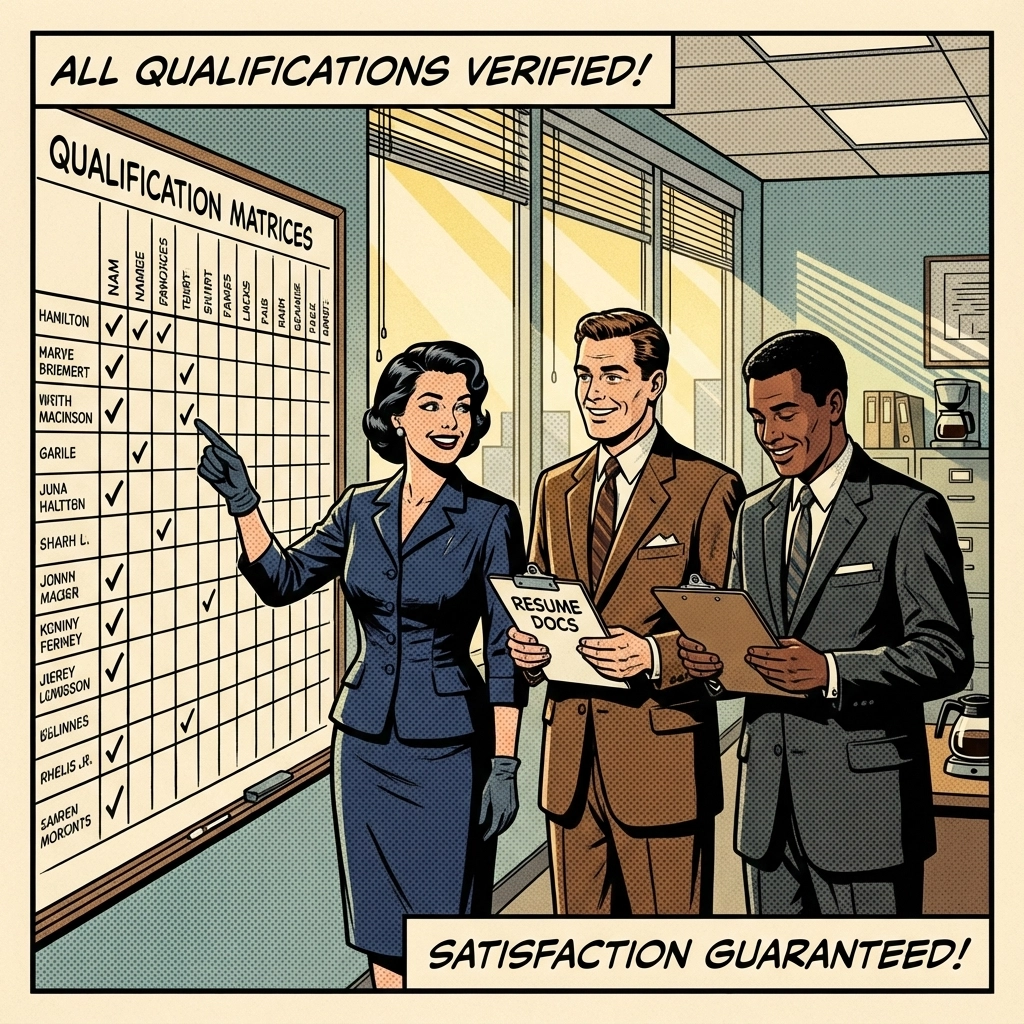
Prevention strategy: Create a qualification matrix for each key person before writing their resumes. Highlight exactly how they meet or exceed each requirement listed in the solicitation.
Building Your Error-Prevention System
The 72-Hour Rule
Submit your proposal at least 72 hours before the deadline. This buffer protects you from last-minute technical issues, gives you time for final reviews, and reduces the stress that leads to careless mistakes.
Use those final 72 hours for:
- Final compliance verification
- Cross-volume consistency checks
- Mathematical verification
- Submission system testing
Red Team Reviews Save Contracts
External proposal reviews catch errors that internal teams miss due to familiarity with the content. Red Team reviewers examine your proposal with fresh eyes, identifying gaps, inconsistencies, and compliance issues.
Effective Red Team process:
- Provide reviewers with the RFP and evaluation criteria
- Give them 2-3 days for thorough review
- Focus their feedback on compliance and evaluation criteria alignment
- Address their concerns before final submission
Quality Control Checklists
Develop standardized checklists for each proposal phase. Include items for compliance verification, pricing review, technical content assessment, and final submission preparation.
Essential checklist categories:
- Section L compliance verification
- Mathematical accuracy confirmation
- Key personnel qualification verification
- Past performance relevance assessment
- Cross-volume consistency review
The Cost of Proposal Errors
Fatal proposal errors don’t just cost you one contract: they can damage your reputation with specific agencies and evaluators. Government contracting is a relationship business, and repeated compliance failures or careless mistakes create lasting impressions.
Consider the true cost:
- Direct proposal development expenses (often $50K-$200K+ for major proposals)
- Opportunity cost of pursuing other contracts
- Team morale and confidence impacts
- Potential damage to agency relationships
- Lost momentum in your growth strategy
30-Second Recap
Fatal federal proposal errors typically fall into three categories: compliance violations (missing Section L requirements, registration issues), technical problems (misaligned volumes, unqualified personnel), and pricing mistakes (mathematical errors, unrealistic costs). Prevent these disasters with compliance matrices, 72-hour submission buffers, Red Team reviews, and standardized quality control checklists. The investment in error prevention systems pays for itself by protecting your proposal investments and maintaining your reputation with government evaluators.
Take Action Before Your Next Proposal
Don’t let preventable errors cost you your next federal contract. The difference between winning and losing often comes down to the systems you build for catching mistakes before they reach evaluators.
Ready to bulletproof your proposal process? Our team at Fix Your Bid has helped hundreds of contractors eliminate fatal errors and win more government contracts. We’ll review your current proposal development process and identify the gaps that could be costing you opportunities.
Schedule a consultation to discuss your proposal challenges, or explore our services to see how we can help you build error-proof proposal systems.
External References
Federal Acquisition Regulation Part 15 – Contracting by Negotiation
Government Accountability Office – Bid Protest Decisions