
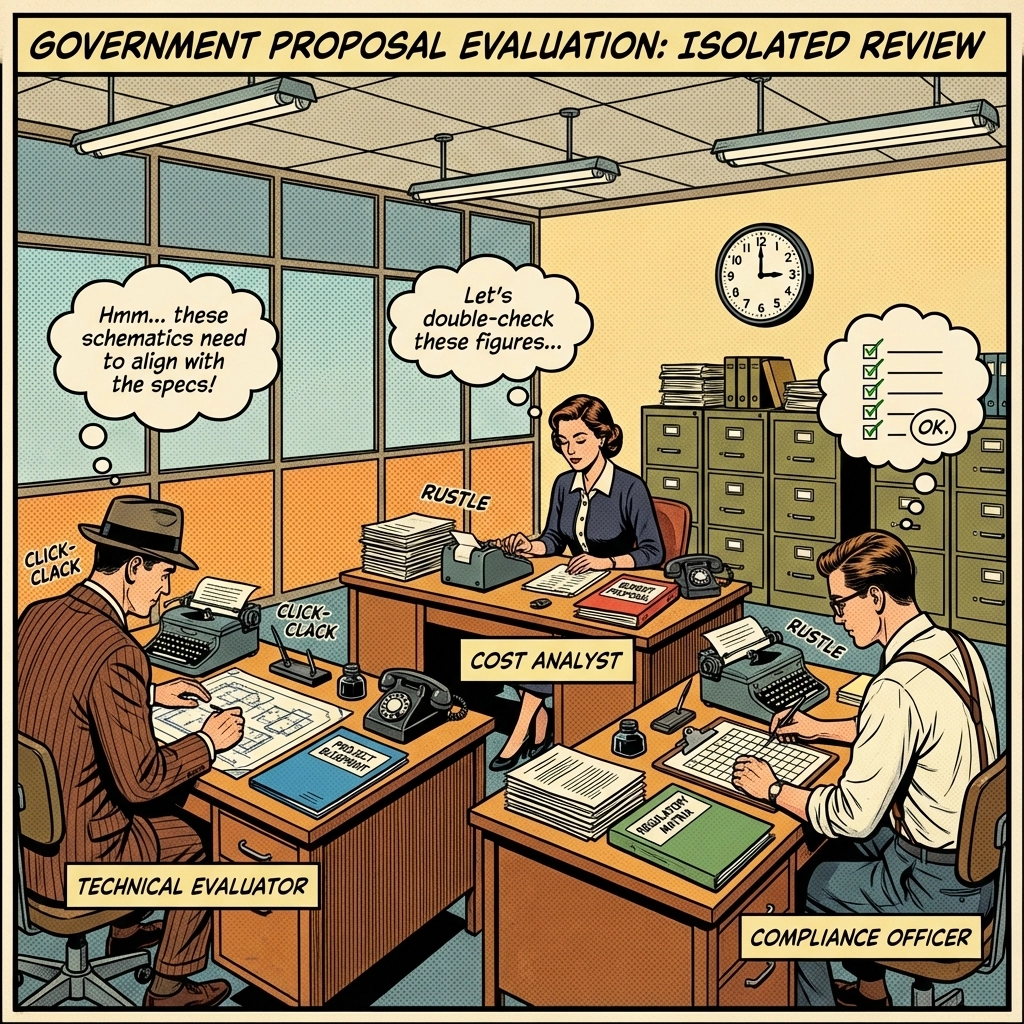
Here’s something most government contractors don’t realize about federal proposal evaluation: evaluators don’t huddle around a conference table debating your proposal’s merits before scoring it. They sit alone at their desks, reviewing your submission in isolation, and assign scores before any group discussion happens.
That single fact changes everything about how you should write your proposals.
When your proposal hits an evaluator’s desk, they’re not getting input from colleagues. There’s no team brainstorming session to decode what you meant. There’s just one person, working through evaluation criteria, trying to find clear answers to specific questions. If they can’t find those answers quickly and confidently, you’re losing points before anyone even speaks your company’s name in a meeting room.
Reason 1: Evaluators Score Alone—Write for the Evaluator
Federal proposal evaluation follows a structured process that most contractors misunderstand. Individual evaluators receive their assigned sections and work independently to score each proposal against predetermined criteria. Only after these individual scores are complete do evaluators meet as a group to discuss their findings and reach consensus.
This means your proposal must work for a single person reading alone, not for a collaborative interpretation process. The evaluator reviewing your technical approach can’t call over to ask the cost analyst what they think you meant by a particular statement. They have to make sense of your proposal on their own.
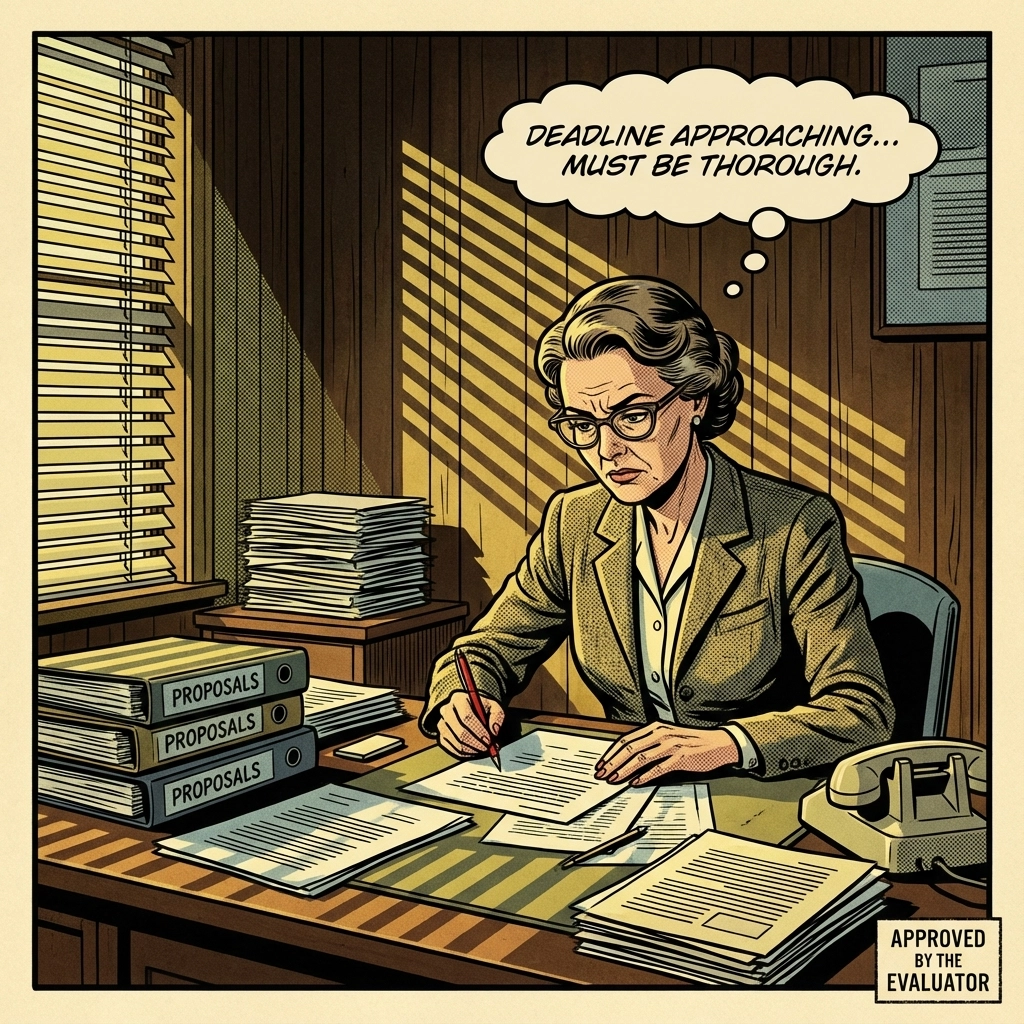
Think about what this looks like in practice. An evaluator opens your proposal, scans the compliance matrix, and starts working through the technical requirements. They’re looking for specific information, checking boxes, and assigning ratings. If your key differentiators are buried on page 47, or if your compliance responses require cross-referencing multiple sections, that evaluator is making decisions based on incomplete information.
The group discussion that happens later can’t fix scores that were already assigned during individual review. By the time evaluators meet to discuss their findings, the damage is already done.
Reason 2: What Evaluators Need to See (Fast and Verifiable)
Evaluators approach your proposal with three fundamental questions, and your structure needs to answer all of them immediately:
Can they find answers without searching? Every requirement in the RFP should have a clear, direct response that’s easy to locate. This means using the same language the RFP uses, organizing responses in the same order as the requirements appear, and making your compliance obvious at first glance.
Is compliance easy to check? Your proposal should include a detailed compliance matrix that references specific page numbers and sections. But beyond that, each section should clearly state which requirement it’s addressing and how your approach meets or exceeds those requirements.
Is your value obvious immediately? Your key benefits and differentiators need to be front and center, not something an evaluator has to piece together from scattered information throughout the document.
Government evaluators often review dozens of proposals in a compressed timeframe. They’re not going to spend twenty minutes trying to decode your company’s unique approach or hunt through appendices to find critical information. If it’s not immediately clear how you meet their requirements and what makes you the best choice, they’ll move on to the next proposal that makes their job easier.
This is particularly crucial for small government contractors who might assume their innovative approach will be obvious to evaluators. Innovation means nothing if evaluators can’t quickly understand and score it.
Reason 3: Where Teams Lose Points When They Don’t Write for the Evaluator
The most common proposal failures happen when teams write for themselves rather than for the person who has to score their work. Here are the specific places where points disappear:
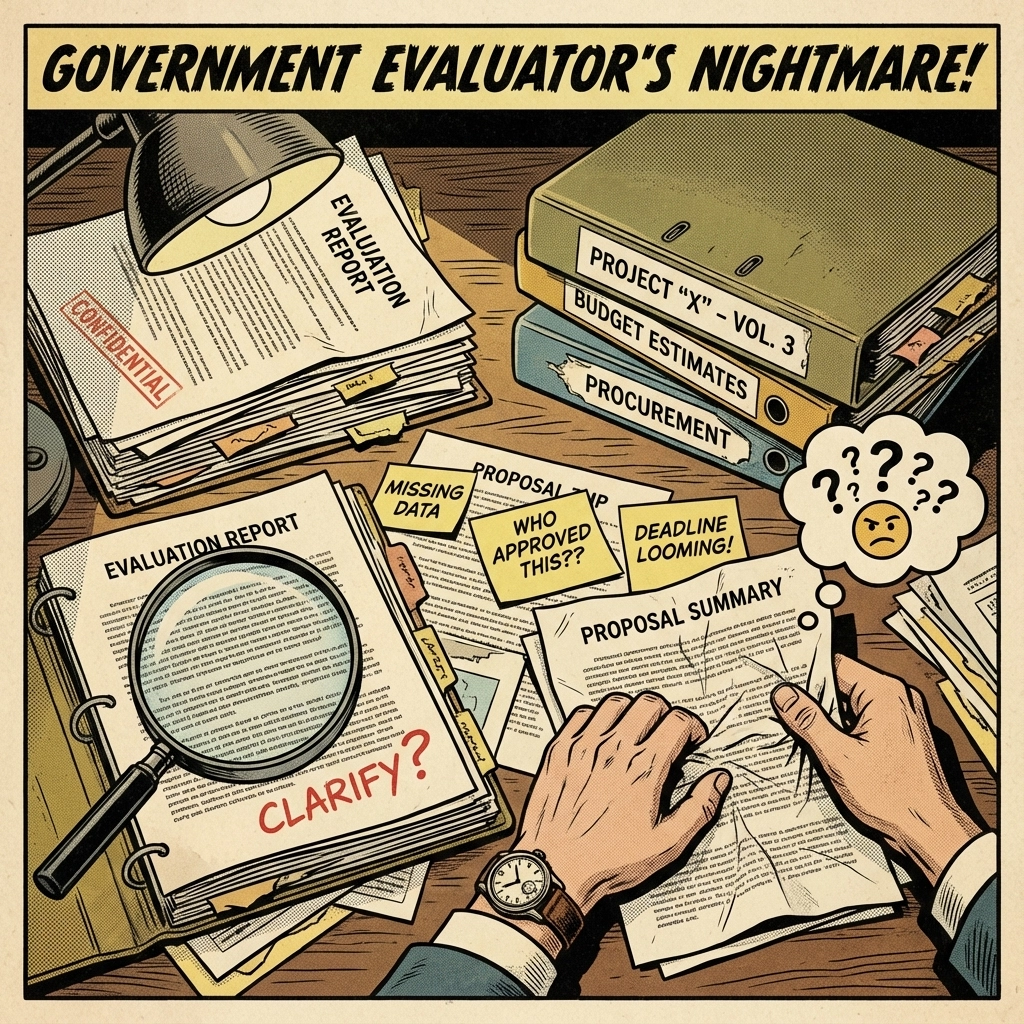
Unclear sections that require interpretation. When you write something like “Our proven methodology ensures optimal outcomes,” you’re forcing the evaluator to guess what that means. They won’t. They’ll score based on what’s clearly stated, which in this case is nothing specific.
Buried answers that require cross-referencing. If your approach to risk management is mentioned briefly in the technical section, detailed in an appendix, and summarized in the management plan, the evaluator reviewing the technical section might not see the complete picture. Each section needs to be comprehensive enough to be scored independently.
Assumptions that context will save you. Just because you’ve been working in this industry for twenty years doesn’t mean the evaluator knows your company’s background. Every proposal needs to stand alone, providing all the context an evaluator needs to understand and score your approach.
Teams also lose points by organizing information for their own convenience rather than the evaluator’s workflow. Your company might think chronologically about project phases, but the evaluator is working through technical requirements, then management requirements, then cost considerations. Your structure needs to match their evaluation process, not your project timeline.
The biggest mistake is assuming evaluators will give you the benefit of the doubt. They won’t. They’ll score what’s clearly presented and documented.
Reason 4: Write for the Evaluator With Requirement-Led Sections
When you write for a single evaluator rather than a group discussion, everything about your approach changes. You need to think about one person, sitting alone, working through evaluation criteria with your proposal as their only information source.
Start each major section with a clear statement of what requirement you’re addressing and how your approach meets it. Use the exact language from the RFP when possible, and organize your response in the same order as the requirements are presented.
Make your value proposition obvious within the first paragraph of each section. Don’t save your best points for the end or assume the evaluator will read every word. Lead with your strengths and support them with specific details.
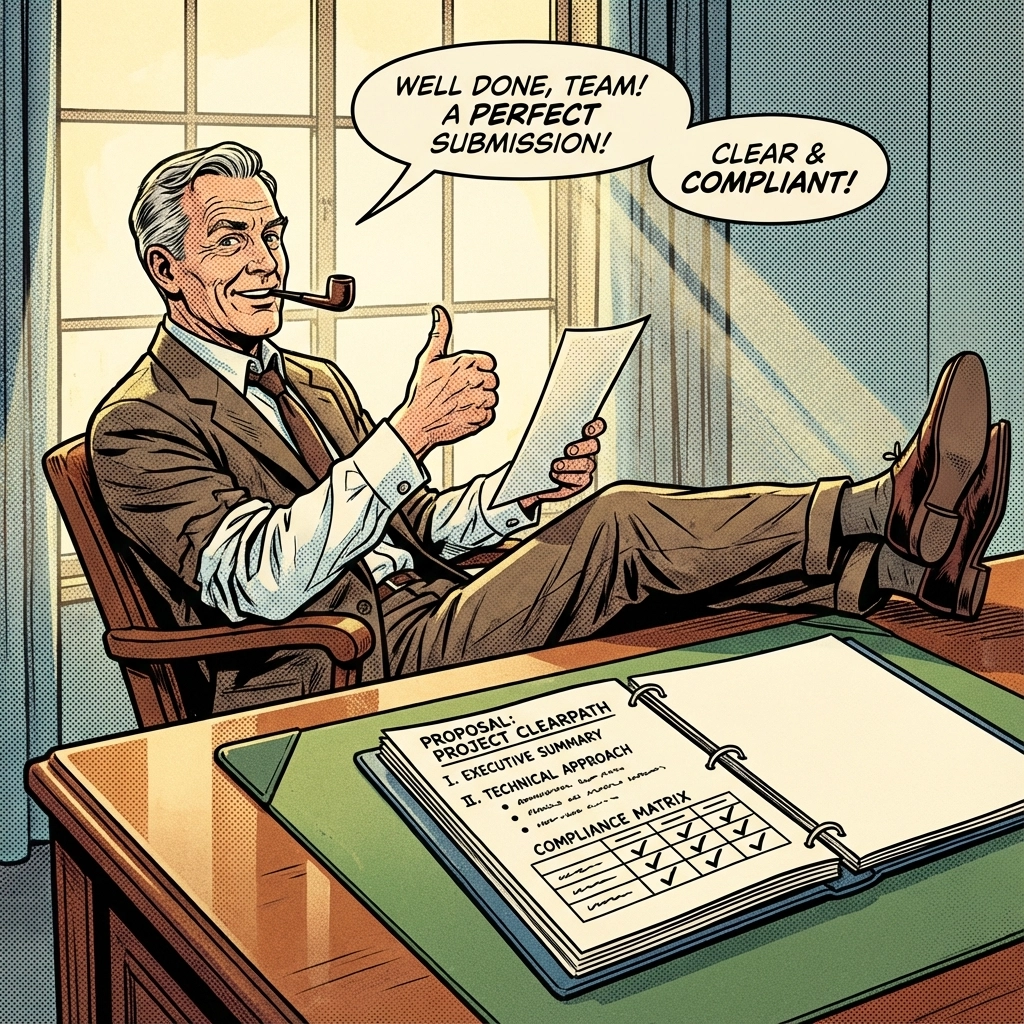
Include enough detail that the evaluator can confidently score your response without seeking additional information. This doesn’t mean writing longer proposals: it means writing more precise proposals that answer evaluation questions directly and completely.
Consider including brief summary boxes or callouts that highlight your key points for each requirement. This helps evaluators quickly identify and score your main differentiators without missing important information.
Reason 5: Structure and Clarity Help Evaluators Score You Higher
Effective proposal structure serves the evaluator’s workflow, not your company’s organizational chart. Here’s how to structure for scoring success:
Follow the RFP organization exactly. If the technical requirements are presented in a specific order, respond in that same order. If they ask for management approach before technical approach, structure your proposal that way.
Use clear, descriptive headings. Instead of generic headings like “Our Approach,” use specific headings like “Quality Assurance Methodology for Data Migration Projects.” This helps evaluators quickly locate and score specific requirements.
Include page references in your compliance matrix. Don’t just list requirements: tell evaluators exactly where to find your response to each one.
Front-load your value. Put your key differentiators and benefits at the beginning of each section, then provide supporting details. Don’t make evaluators hunt for why they should score you highly.
The goal is to create a proposal that reads like it was designed specifically for the evaluation process, because it should be. Every structural decision should make the evaluator’s job easier and your compliance more obvious.
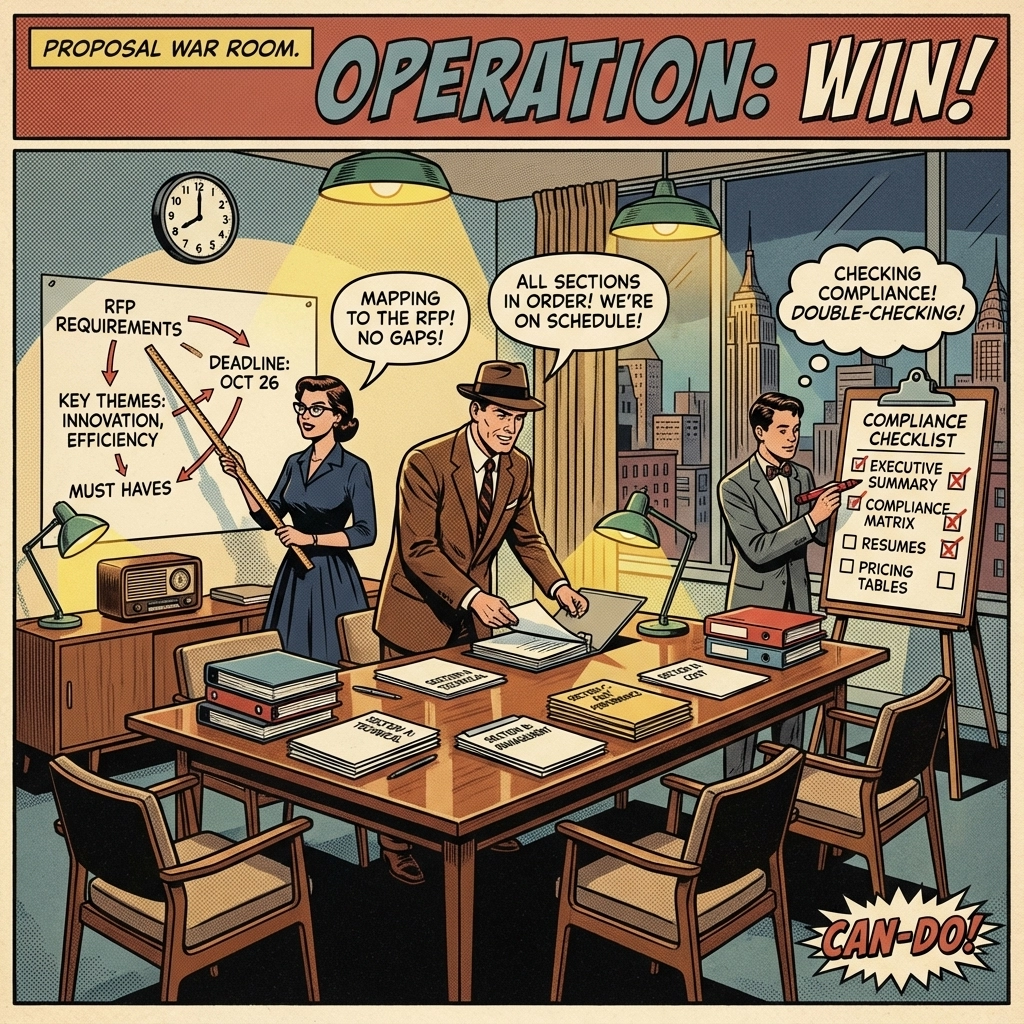
Remember that structure isn’t just about organization: it’s about communication. Good structure communicates that you understand the evaluation process, respect the evaluator’s time, and have organized your information for their success, not just your convenience.
Your Proposal Success Starts With Clarity
Federal proposal evaluation has become more competitive and time-constrained than ever. Evaluators are processing more proposals in less time, which means clarity and structure matter more than elaborate presentations or lengthy explanations.
The proposals that win are the ones that make evaluation easy. They answer questions directly, organize information logically, and present value propositions that are impossible to miss or misunderstand.
If you’re struggling with proposal structure or want to ensure your next submission is designed for evaluation success, we can help. At Fix Your Bid, we specialize in helping government contractors create proposals that score well because they’re written from the evaluator’s perspective.
Ready to structure your next proposal for scoring success? Contact us today to discuss how we can help you write proposals that evaluators love to score highly.