
If you’ve been paying attention to federal government contracting news this January, you’ve probably noticed something: the ground is shifting fast. Between executive orders, regulatory overhauls, and a massive new defense authorization, 2026 is shaping up to be one of the most transformative years for government contractors in decades.
Whether you’re a small business trying to break into the federal market or an established contractor looking to stay competitive, these changes will affect how you bid, how you comply, and how you win. Let’s break down what’s happening: and what it actually means for your proposal and compliance teams.
The Revolutionary FAR Overhaul: Less Red Tape, More Discretion
The Federal Acquisition Regulation (FAR) is getting its biggest makeover in memory. The Revolutionary FAR Overhaul (RFO) has moved from informal guidance into formal rulemaking in early 2026, and the changes are significant.
Here’s what’s happening:
- Over 500 FAR requirements have been targeted/relieved so far. The goal is to strip the regulation down to statutory essentials and remove outdated, redundant, or overly prescriptive rules.
- “Commercial-first” is now the default. Agencies are being directed to prioritize existing government-wide contract vehicles (GWACs, IDIQs, GSA schedules) before launching new procurements.
- Contracting officers get more discretion. This means more flexibility in set-asides, source selection, and deal structuring: but also more variability in how different agencies approach the same types of contracts.

What This Means for Contractors
For small businesses, this is a double-edged sword. On one hand, less red tape can mean faster awards and fewer administrative hurdles. On the other hand, more discretion means less predictability. Your proposal needs to stand on its own merits: because there’s less room to rely on rigid compliance checklists alone.
Quick take: Make sure your proposals are clear, direct, and easy to evaluate. Contracting officers have more latitude now, but they’re still under pressure to justify their decisions. If your value isn’t obvious on page one, you’re at a disadvantage. For more on writing for evaluators, check out our guide on writing for the evaluator.
Another notable change: the Cost Accounting Standards (CAS) applicability threshold may increase from roughly $2 million to as much as $35 million. If you’re a mid-sized contractor, this could significantly reduce your cost accounting burden: but you’ll want to watch for final rulemaking before adjusting your systems.
The 2026 NDAA: $900 Billion and Stricter Accountability
The 2026 National Defense Authorization Act (NDAA) was signed into law with a defense budget and a host of acquisition reforms. Here’s what stands out:
- Domestic preference enforcement is tightening. The “make it here” agenda is in full effect, with increased scrutiny on supply chain localization and sourcing decisions. If your supply chain relies on foreign components, expect more questions: and potentially more disqualifications.
- Performance accountability is tightening. The executive order “Prioritizing the Warfighter” signals a clear message: defense contractors who underperform may face restrictions on buybacks and dividends. The government is signaling that it expects results, not just compliance.
- Acquisition reforms favor speed and consolidation. Agencies are consolidating contract vehicles and expanding use of established GWACs and IDIQs to minimize procurement lead times.
What This Means for Contractors
If you’re in the defense space, the opportunities are real: but so is the scrutiny. The days of coasting on incumbency or program status alone are fading. Performance credibility and demonstrated capability are what will drive award decisions.
Quick take: Document your past performance thoroughly and make it easy for evaluators to verify. If you’re bidding on defense work, be prepared to answer detailed questions about your supply chain and domestic sourcing. And if you’re an incumbent, don’t assume you’ll win the recompete: here’s how to protect your advantage.
DOJ’s Cybersecurity Crackdown: False Claims Act in Play
Here’s a development that’s flying under the radar for some contractors: but shouldn’t be.
The Department of Justice is ramping up enforcement of cybersecurity compliance requirements, and they’re using the False Claims Act to do it. That means if you certify compliance with NIST standards, CMMC requirements, or other cybersecurity mandates: and you’re not actually compliant: you could be facing serious legal exposure.
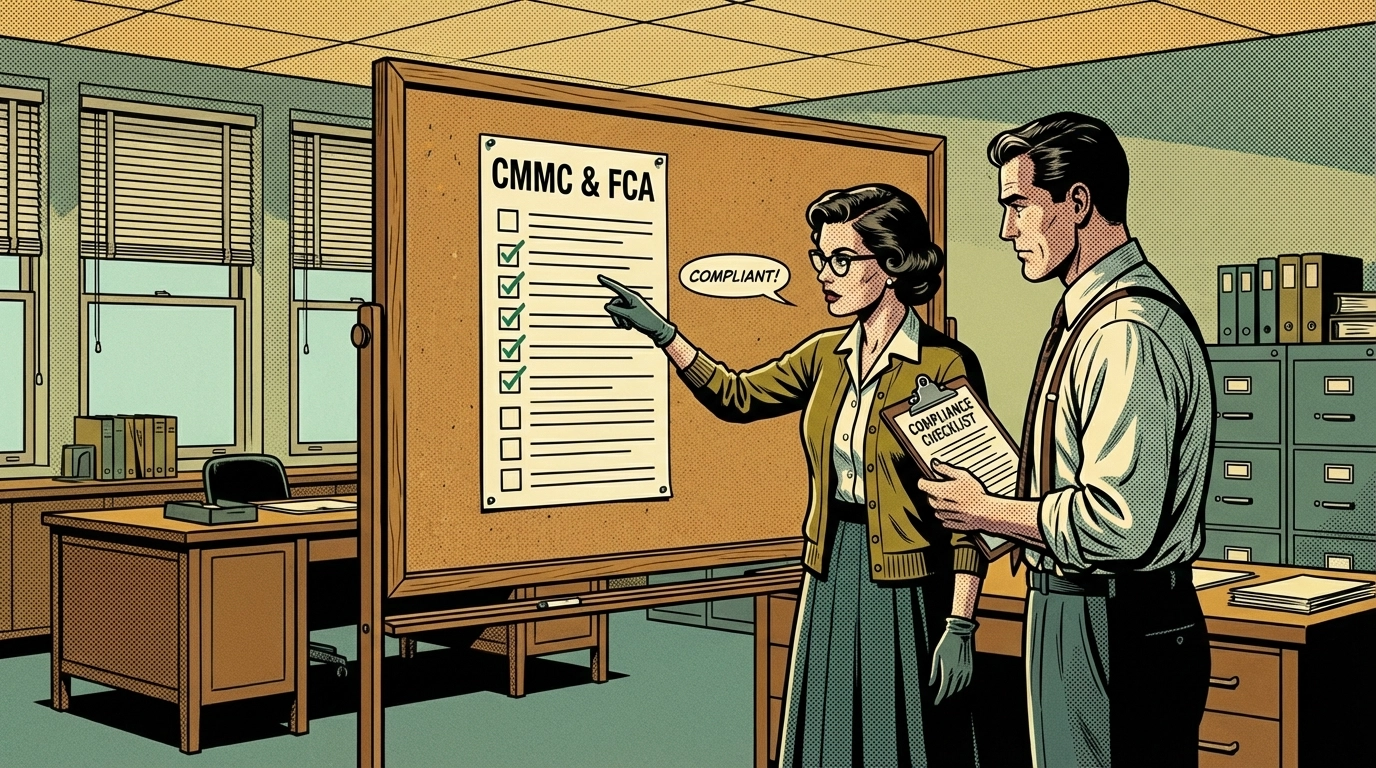
The Cybersecurity Maturity Model Certification (CMMC) phased rollout began in November 2025. Right now, Level 1-2 self-assessments are required, with progression to Level 2-3 certifications through 2028. A proposed government-wide FAR CUI rule would extend NIST cybersecurity standards beyond DoD to civilian agencies as well.
What This Means for Contractors
Cybersecurity compliance is no longer a checkbox exercise. If you’re self-certifying, make sure you can back it up. If you’re not sure where you stand, get an honest assessment before you sign anything.
Quick take: Don’t treat cybersecurity as a “we’ll figure it out later” problem. The False Claims Act carries significant penalties, and DOJ has made clear that cybersecurity is a priority. If you need help understanding compliance requirements, our services page is a good starting point.
Budget Volatility and the DOGE Effect
Federal spending in 2026 is sharply divided. Defense and national security budgets are up, while civilian agency spending is declining. The Department of Government Efficiency (DOGE) has pushed agencies to terminate contracts and recover savings.
What does this mean in practice?
- Defense, DHS, and national security-adjacent agencies are growth markets. If you’re not already positioned in these spaces, now is the time to start building relationships and past performance.
- Civilian agencies are under pressure. Expect slower awards, tighter budgets, and more competition for fewer dollars.
- Unspent funds are being scrutinized. If you’re on a contract with slow burn rates or underutilized capacity, don’t be surprised if it gets flagged for review.

What This Means for Contractors
Diversification is critical. If your entire portfolio is in one agency or one market, you’re exposed. Start tracking evolving agency structures and workforce reductions (About 317,000 federal employees separated/left the government in 2025) to understand where opportunities are growing: and where they’re shrinking.
Quick take: Don’t put all your eggs in one basket. If you’re heavily dependent on civilian agency work, start building your defense or DHS portfolio now. And if you’re wondering whether to bid on a new opportunity, our checklist can help you make smarter bid/no-bid decisions.
Set-Asides: Still Valuable, But Not a Guarantee
If you’re an 8(a), HUBZone, SDVOSB, or WOSB contractor, your status still matters: but it’s not the automatic advantage it once was. Federal contracting is moving away from reliance on discretionary set-asides. Agencies are favoring open competition when mission risk is high, and they’re scrutinizing eligibility, ownership, and control requirements more closely.
Quick take: Set-aside eligibility can still open doors, but you need to walk through them with a strong proposal and solid past performance. Don’t assume your status will carry you. For more on what actually wins contracts, see our post on what small GovCons can actually do.
Practical Advice for Proposal and Compliance Teams
Here’s the bottom line for 2026:
-
Structure matters more than ever. With contracting officers having more discretion, your proposal needs to be clear, direct, and easy to evaluate. Don’t bury your answers or assume context will bail you out.
-
Cybersecurity is a legal risk, not just a compliance task. If you’re certifying compliance, make sure you can prove it. The False Claims Act is not a theoretical threat.
-
Domestic sourcing is under the microscope. If you’re in defense, know your supply chain inside and out.
-
Diversify your portfolio. Budget volatility and agency restructuring mean that yesterday’s safe market might not be tomorrow’s.
-
Past performance is your currency. Document everything, make it easy to verify, and keep your CPARS ratings strong.
Stay Ahead of the Curve
Federal contracting in 2026 is moving fast. The rules are changing, the stakes are higher, and the winners will be the contractors who adapt quickly and execute cleanly.
If you’re not sure where your proposals stand: or you need a second set of eyes before you submit: reach out to Fix Your Bid. We help contractors write proposals that win, and we’d love to help you navigate what’s ahead.