
Most proposals are written for the wrong audience. They are organized around your company's narrative, structured to satisfy internal subject matter experts, and reviewed by people who already understand your solution. The government evaluator reading your proposal has none of that context. They have Section M, limited time, and dozens of proposals to assess. If your proposal does not align with how they work, it will not receive the rating you expect: regardless of the quality of your solution.

Evaluators Do Not Compare Proposals Side by Side
A common misconception is that evaluators rank proposals against each other. They do not. Each proposal is evaluated independently against the stated criteria in Section M. The evaluator's task is to determine whether the written record supports a specific adjectival rating: Acceptable, Good, or Outstanding. If the documentation does not justify escalation to a higher rating, the proposal will not receive one, even if it is better than others submitted.
This is not a subjective process. Evaluators must defend their ratings in writing. If they cannot cite specific evidence from your proposal that demonstrates material risk reduction or substantiated impact, they cannot escalate the rating. The burden is entirely on your proposal to provide that justification.
Why Proposals Are Written for the Wrong Audience
Proposals are developed by internal teams who are deeply familiar with the company's capabilities. Writers, subject matter experts, and capture managers all know the backstory. They know what your past performance references mean. They understand the technical shorthand. They recognize your company's strengths without needing them spelled out.
The evaluator does not have that knowledge. They are reading your proposal for the first time, often under time pressure, with no prior exposure to your company. If your proposal assumes familiarity, requires interpretation, or prioritizes your internal perspective over the evaluation criteria, it will not score well.
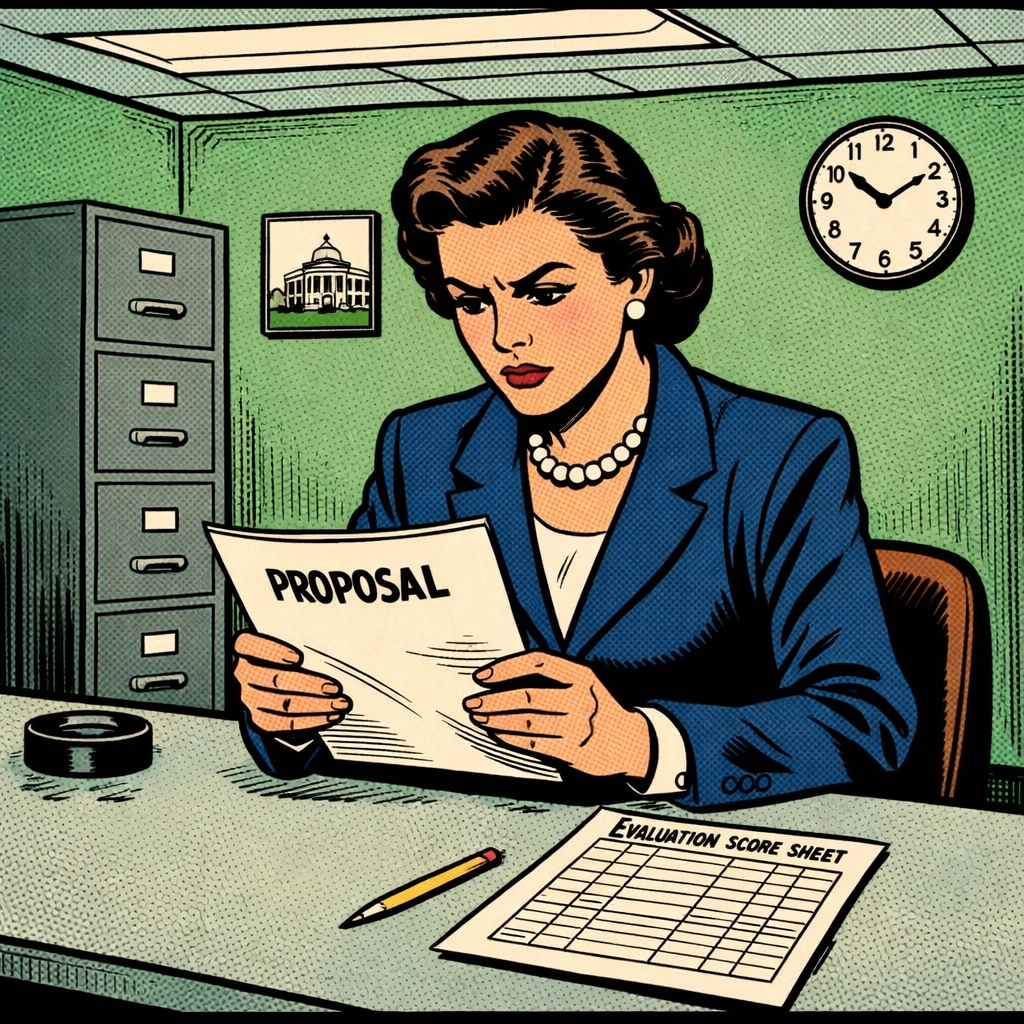
The Structural Problem: Your Outline vs. Section M
Most proposals are organized around a logical flow that makes sense to the proposal team. Technical approach is presented in the order your company would execute it. Management approach follows your internal org chart. Past performance is grouped by contract type or customer.
This structure creates friction for the evaluator. Section M specifies the order in which evaluation factors will be assessed. If your proposal does not mirror that structure exactly, the evaluator must search for the information they need. Every moment spent navigating your document is a moment not spent evaluating your strengths.
When evaluators cannot quickly locate the evidence required to support a higher rating, they default to the rating they can defend with what they have found. That is usually not the highest rating.
How Evaluators Actually Read Proposals
Evaluators do not read proposals sequentially from cover to cover. They work methodically through Section M, one evaluation factor at a time. For each factor, they scan your proposal for evidence that addresses the stated criteria. They look for:
- Direct responses to the requirement
- Substantiated claims supported by data or past performance
- Operationalized risk mitigation, not just risk identification
- Measurable benefits tied to government objectives
- Documentation that supports rating escalation
If your proposal places critical information in the wrong section, embeds it in dense narrative, or presents it in a way that requires interpretation, the evaluator may not find it. They are not obligated to search beyond the section indicated in your compliance matrix. If the evidence is not where they expect it, it effectively does not exist.
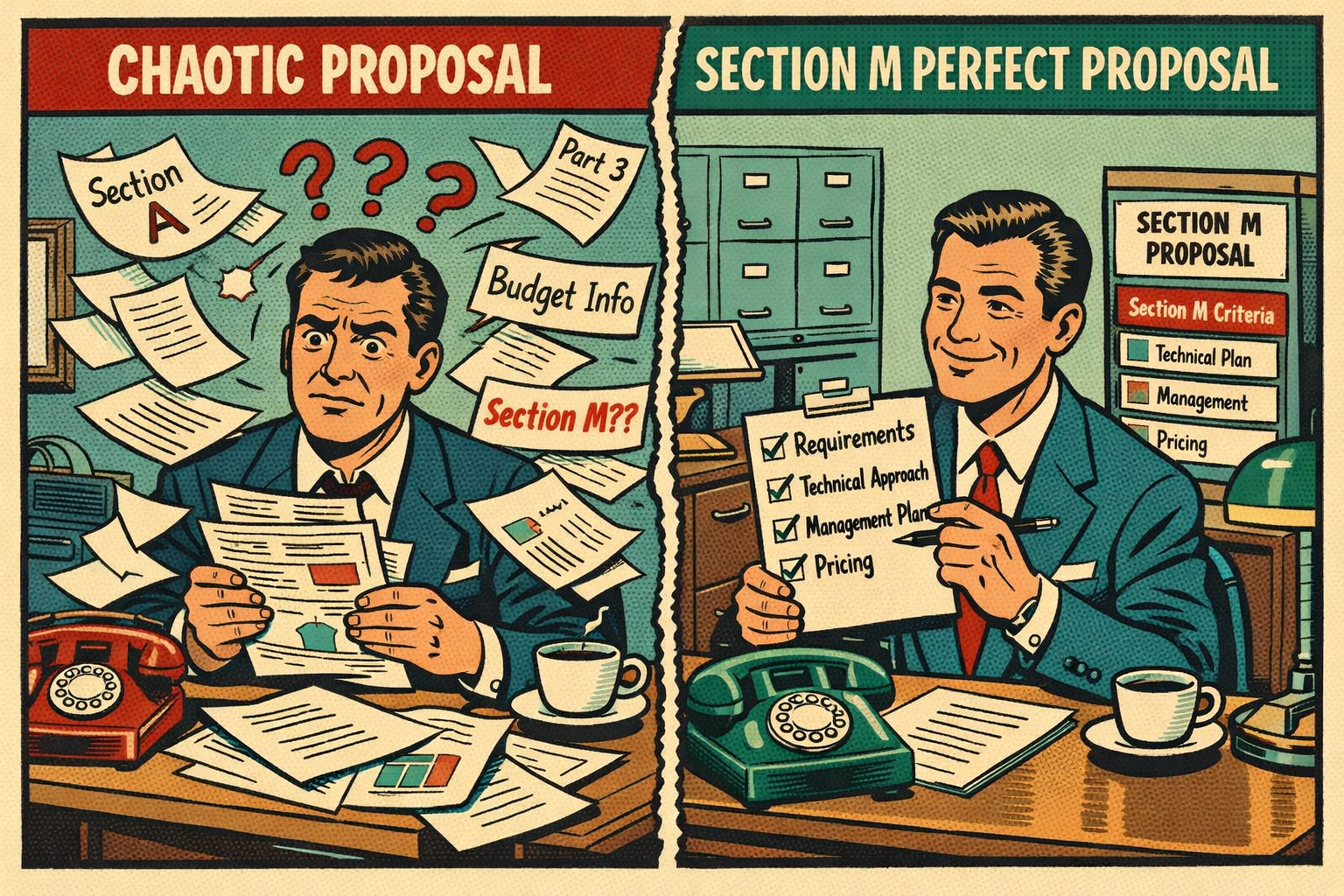
What Prevents Rating Escalation
Most proposals that stall at "Good" do so because the written record does not support a higher rating. The solution may be strong. The team may be qualified. The past performance may be relevant. But if the proposal does not explicitly connect those elements to the evaluation criteria in a way that justifies escalation, the rating will not increase.
Evaluators hesitate to escalate ratings when:
- Impact is described but not quantified
- Risk mitigation strategies are listed but not operationalized
- Cost savings are claimed without supporting analysis
- Benefits are stated without measurable outcomes
- Strengths do not materially reduce identifiable risks
The difference between Good and Outstanding is not enthusiasm. It is defensibility. If the evaluator cannot cite specific evidence from your proposal that demonstrates material advantage, they cannot justify a higher rating in the evaluation documentation.
Writing to the Evaluator's Outline
The most direct way to improve evaluator comprehension is to structure your proposal exactly as Section M is structured. Use the same headings. Follow the same order. Number your sections to correspond with evaluation factors. This is not about creativity. It is about reducing cognitive load for the person determining your rating.
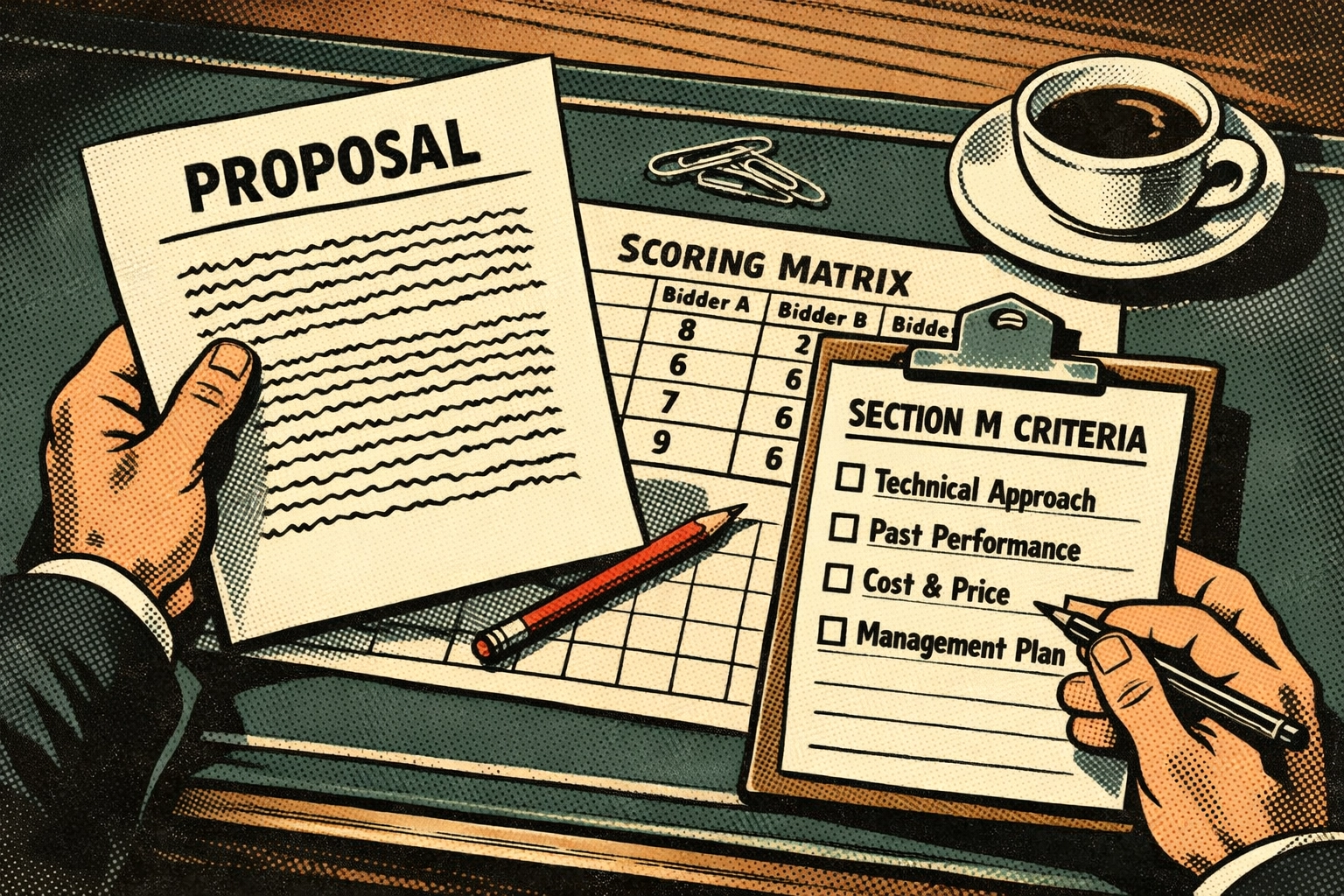
When your proposal mirrors Section M, the evaluator can work through their evaluation checklist efficiently. They know where to find each required element. They can quickly verify compliance. They can assess your response without searching through unrelated content. This increases the likelihood that your strengths will be identified and documented in a way that supports rating escalation.
Using the Evaluator's Language
Evaluators must document their ratings using the language in Section M. If the solicitation emphasizes "demonstrated ability to manage subcontractors on similar contracts," your proposal should use that exact phrasing when presenting relevant past performance. If the RFP specifies "risk mitigation strategies that reduce schedule risk," your technical approach should explicitly identify schedule risks and describe operationalized mitigation measures.
This is not about keyword stuffing. It is about making the connection between your response and the evaluation criteria explicit. The evaluator should not need to interpret your language or infer the relevance of your example. The alignment should be obvious.
Eliminating Internal Perspective
Proposals often include language that makes sense to the proposal team but creates ambiguity for evaluators. Phrases like "our proprietary methodology" or "industry-leading approach" mean nothing without supporting evidence. References to internal tools, processes, or organizational structures require explanation if the evaluator has no prior context.
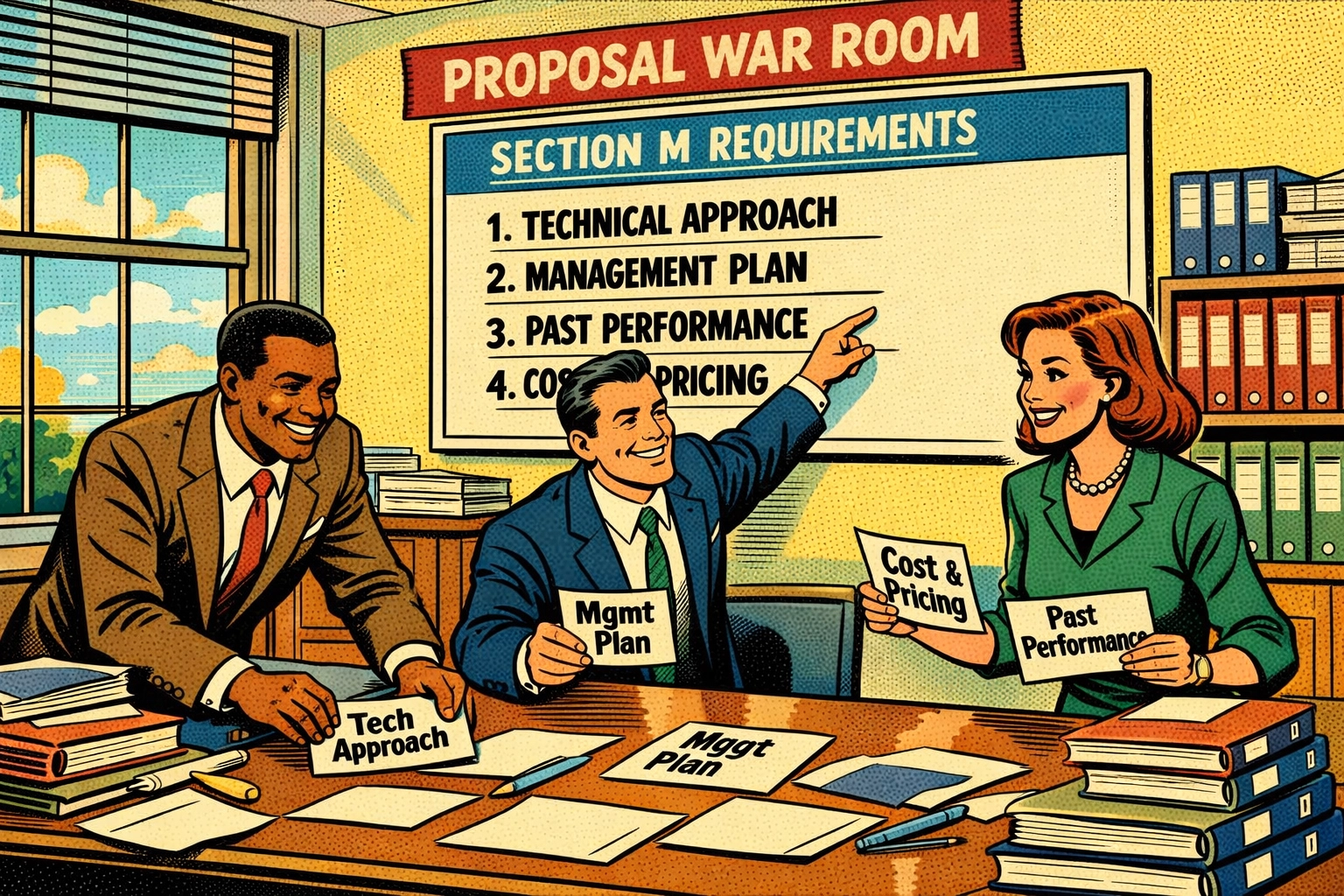
Every sentence in your proposal should be written as if the evaluator has never heard of your company. Define acronyms. Explain technical terms. Provide context for claims. Reference specific past performance that substantiates capability. Remove assumptions about shared knowledge.
Compliance as a Signal
Evaluators notice when proposals do not comply with formatting requirements. Page limits, font specifications, margin settings, and file naming conventions are not administrative details. They are indicators of how carefully a proposal was prepared. Noncompliance raises questions about whether the offeror will follow contractual requirements with the same level of attention.
More importantly, noncompliance can result in proposal rejection before evaluation even begins. A proposal that exceeds page limits or omits required documentation may be eliminated without being scored. Compliance is not optional.
Coordination for a Single Voice
Proposals developed by multiple contributors often read inconsistently. Terminology varies. Formatting differs. One section refers to "the government" while another says "the agency." These inconsistencies create unnecessary friction for the evaluator and signal lack of coordination.
The final proposal should read as though one person wrote it. This requires a consolidated editing pass after all sections are drafted. Terminology must be standardized. Tone must be consistent. Formatting must be uniform. The evaluator should not be able to tell where one writer stopped and another started.

The Written Record Determines the Rating
Proposals are not evaluated on potential. They are evaluated on what is written. If your company has the capability to deliver an outstanding solution, but that capability is not clearly documented in the proposal, it will not influence the rating. Evaluators assess only the information provided in the submitted document. They do not make inferences. They do not give credit for implied strengths. They evaluate what is on the page.
Before submission, the question to answer is not whether your team believes the proposal is strong. The question is whether the written record supports a higher rating when evaluated strictly against Section M. If the answer is uncertain, independent evaluation provides clarity before award decisions are made.
Understanding how your proposal will be judged is not optional in best value tradeoff procurements. The structure, language, and documentation in your proposal determine whether the evaluator can justify the rating your solution deserves.
If you need help simulating how evaluators will assess your proposal under Section M, our services focus specifically on rating defensibility before submission.