
A federal proposal debrief is not a performance review. It is not a comparison of your solution against the winner's approach. It is an autopsy of the written record: your written record: and why that record did not justify a higher adjectival rating under the stated evaluation criteria.
Most contractors treat debriefs as an opportunity to learn what the winner did differently. That perspective misunderstands how evaluation works. Proposals are not compared side by side. Each proposal is evaluated independently against Section M criteria. The debrief reveals why your documentation did not support rating escalation, regardless of what anyone else submitted.
If you approach the debrief correctly, it becomes the most valuable intel you will receive in the entire procurement cycle.

What the Debrief Actually Tells You
When an evaluator assigns a rating of "Good" instead of "Outstanding," that decision is documented. The evaluation record must explain why escalation was not justified. The debrief is your window into that documentation.
The evaluator is not telling you that your solution was inferior. They are telling you that the written record: your proposal: did not provide sufficient evidence to defend a higher rating. That distinction matters.
In every evaluation, the question is not whether your approach would work. The question is whether your proposal substantiated impact, operationalized risk mitigation, and provided measurable evidence that justified escalating the rating.
Most proposals stall at Good because:
- Impact is described but not substantiated
- Risk mitigation is mentioned but not operationalized
- Cost savings are claimed but not explained
- Benefits are stated but not measurable
- Strengths do not materially reduce performance risk
The debrief tells you where those gaps existed in your specific proposal.
Why Proposals Are Not Compared During Evaluation
This is the most misunderstood aspect of federal procurement evaluation. Contractors often ask during debriefs: "What did the winner do that we didn't?"
That question reflects a fundamental misunderstanding.
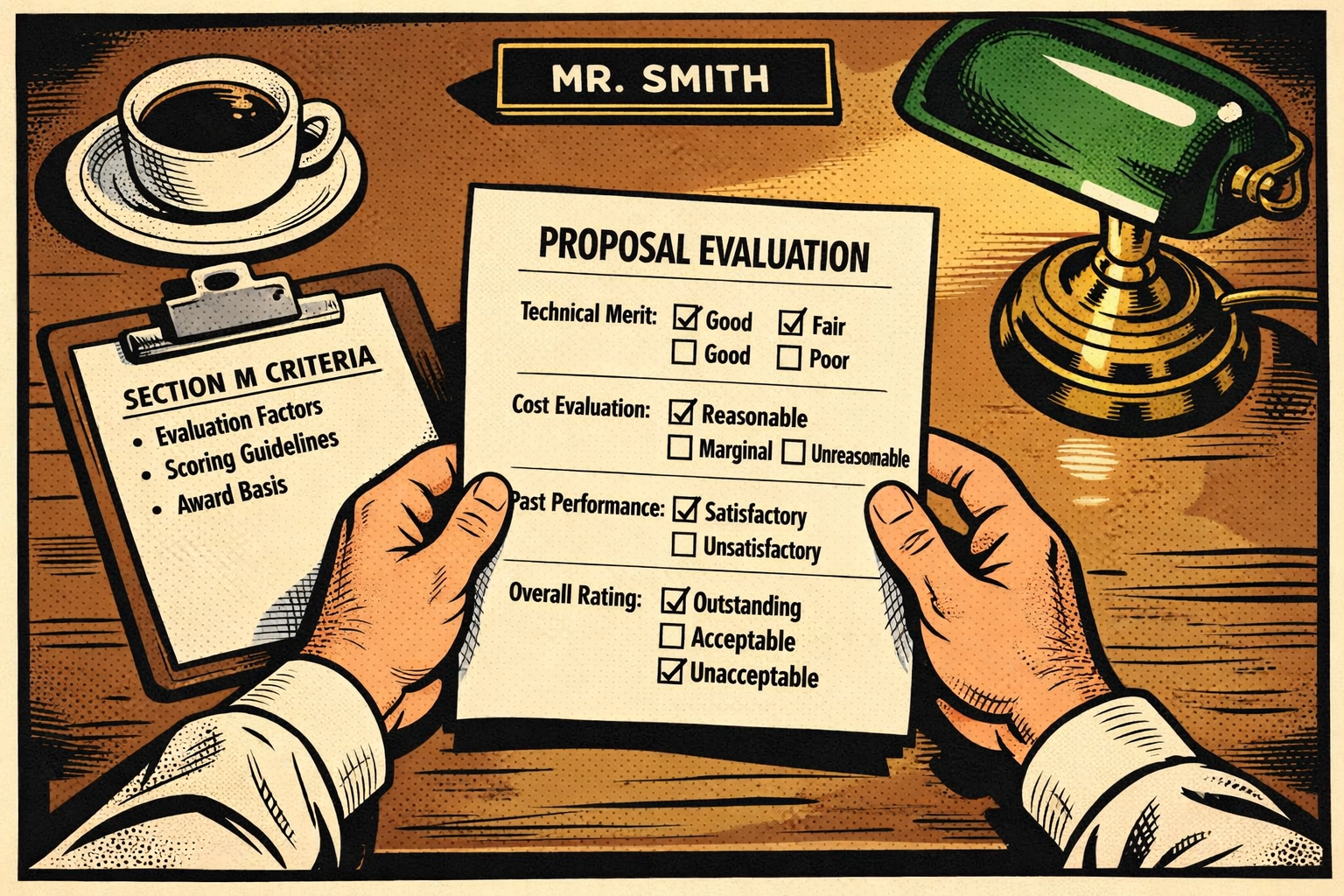
Each proposal is evaluated against the criteria. Period. If your proposal did not support a rating of "Outstanding," that determination was made independently of what the awardee submitted. The evaluator's job is to assess whether your written record justified escalation. If it did not, the rating reflects that gap.
When you receive feedback that your solution "did not sufficiently demonstrate measurable impact," the evaluator is not saying the winner demonstrated it better. They are saying your proposal did not meet the threshold required for rating elevation under Section M.
The debrief is not comparative. It is diagnostic.
What Evaluators Are Actually Telling You
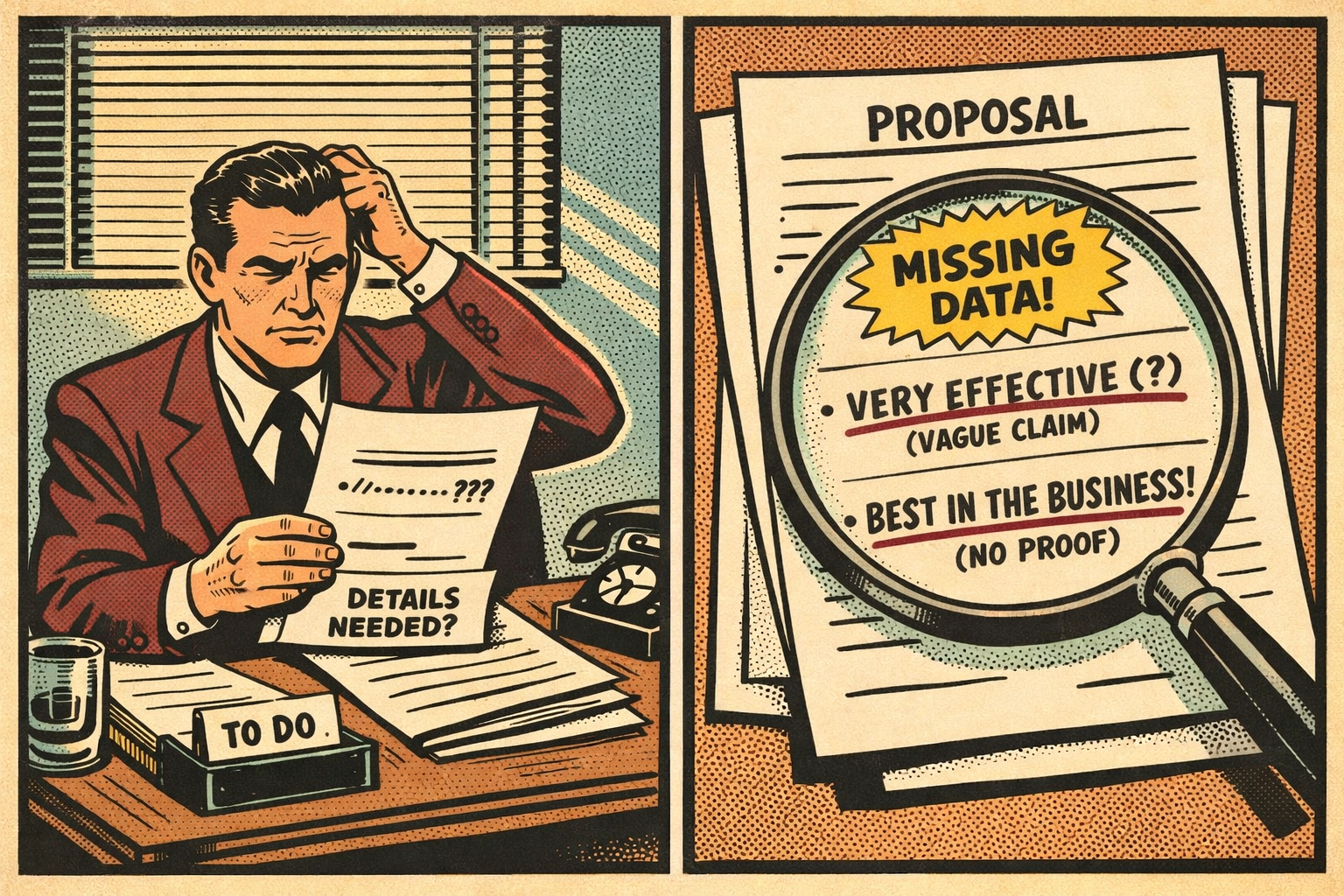
Evaluator feedback in debriefs is often misinterpreted because contractors are listening for the wrong signals. When an evaluator says your proposal "demonstrated good technical understanding but did not provide sufficient detail on implementation risk mitigation," they are giving you specific information about rating defensibility.
Translation: Your proposal described the approach. It did not operationalize how risk would be identified, tracked, mitigated, and escalated in measurable terms. Without that documentation, the evaluator could not defend escalating your rating.
Here are common debrief statements and what they actually mean:
"Your solution was well-written but did not demonstrate material impact."
Your proposal explained what you would do but did not quantify how it would measurably improve outcomes against the government's stated objectives.
"The approach was sound but risk mitigation was not sufficiently detailed."
You listed risks. You did not operationalize how those risks would be managed with specific processes, metrics, and thresholds.
"Your staffing plan was adequate but did not distinguish itself from other offerors."
Your résumés met minimum qualifications. They did not document experience directly relevant to the specific risks and requirements in this procurement.
"Cost savings were mentioned but not substantiated."
You claimed efficiency. You did not explain the mechanism that would generate savings or provide a baseline for measurement.
Every one of these statements is evaluator shorthand for: The written record did not support rating escalation.

The Questions That Matter in a Debrief
Most contractors ask the wrong questions during debriefs. They focus on what the winner did or how scores were distributed. Those questions provide limited actionable intel.
The questions that extract usable information are:
"Which evaluation criteria resulted in lower ratings, and what specific gaps in our documentation prevented escalation?"
This forces the evaluator to tie feedback directly to Section M and the written record.
"Were there specific areas where our proposal described an approach but did not sufficiently substantiate impact or operationalize risk mitigation?"
This identifies whether the issue was absence of information or insufficient detail.
"Did evaluators note any strengths in our proposal that were documented but not considered material enough to justify rating elevation?"
This reveals whether you provided evidence that was dismissed as incremental rather than material.
"Where did our proposal create evaluator hesitation, and what documentation would have been required to resolve that hesitation?"
Hesitation prevents rating escalation. This question identifies exactly where defensibility broke down.
The goal is not to learn what the winner did. The goal is to understand where your written record failed to justify a higher rating.
What to Ignore During the Debrief
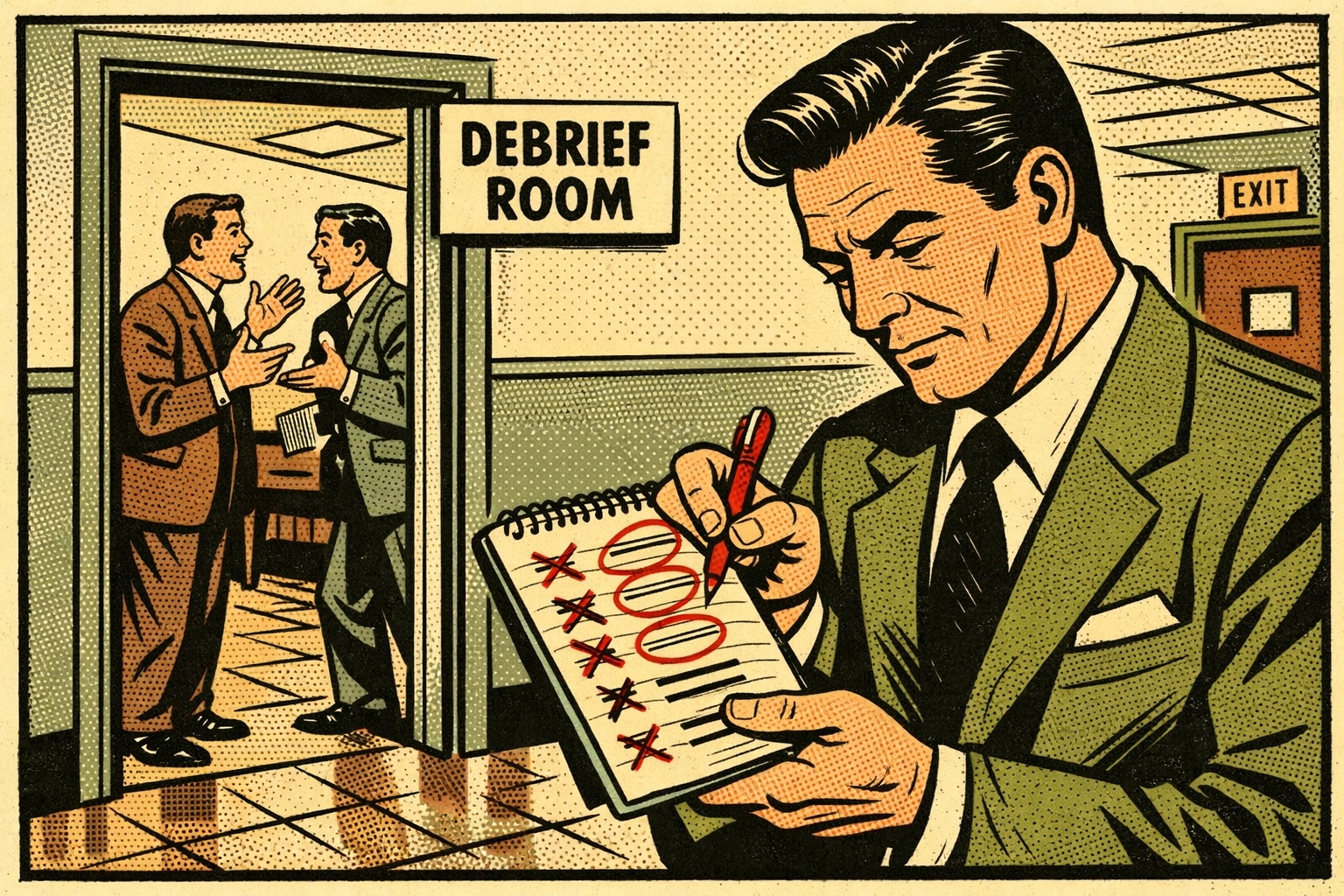
Not all debrief feedback is equally valuable. Some information provides no actionable path to improving your rating defensibility in future procurements.
Ignore:
Comparative statements about other offerors.
Your rating was determined independently. What others did is irrelevant to your documentation gaps.
Vague feedback about "not standing out."
This is not an evaluation standard. Ratings are determined by criteria, not differentiation.
Subjective assessments of "confidence" or "enthusiasm."
These are not documented in the evaluation record. Focus on what was written, not what evaluators felt.
Discussions about price unless you were eliminated for being unreasonably high or low.
Price evaluation is separate from technical evaluation. The debrief should focus on why your technical rating did not escalate, not why price was a factor in tradeoff.
The only feedback that matters is feedback tied directly to evaluation criteria and documentation gaps in your proposal.
Turning Evaluator Feedback Into Rating Defensibility
The debrief is valuable only if you extract specific, actionable intel that informs how you document your next proposal.
After the debrief, you should be able to answer:
- Which evaluation criteria did not support rating escalation in my proposal?
- What specific documentation was missing or insufficient?
- Where did my proposal describe rather than substantiate?
- Which claimed strengths were dismissed as incremental rather than material?
- What would the written record have needed to include for the evaluator to defend a higher rating?
If you cannot answer those questions after your debrief, you did not ask the right questions.

The Real Value of a Loss
Winning a contract provides revenue. Losing a contract: and debriefing correctly: provides insight into how your proposals are actually being evaluated.
Most contractors do not lose because their solutions are inadequate. They lose because their written record does not justify rating escalation under the stated criteria.
That is correctable. But only if you understand what the evaluator needed to see in the documentation and did not find.
The debrief is not about learning what the winner did. It is about learning why your proposal stalled at Good when the written record could have supported Outstanding.
Before your next submission, that determination should be clear. Independent evaluation provides clarity before award decisions are made. Understanding how your proposal will be judged against Section M is not optional in high-value procurements.
The debrief tells you exactly where defensibility broke down. What you do with that information determines whether your next proposal justifies escalation: or stalls again.